Wine in art
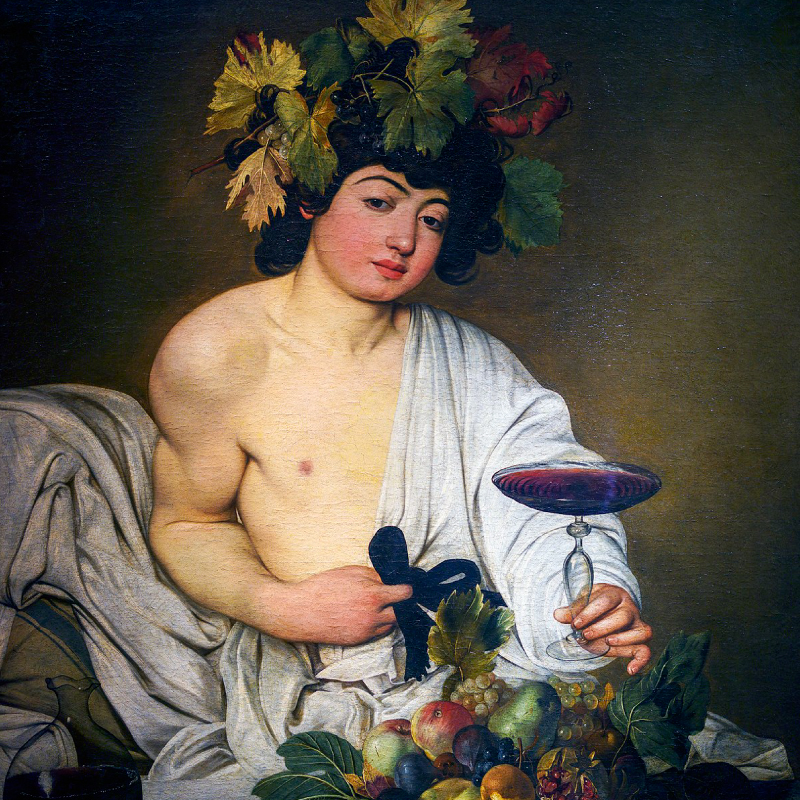
Wine is a form of art and for this reason there are many paintings and works in which it appears as an essential element. Wine and the vine have been represented in all their aspects from prehistoric times to the present day: from grape harvest scenes, to convivial movements, to sacred and profane mythological references, to portraits and genre scenes. One of the famous representations is "The Last Supper" (1495-1498) by Leonardo Da Vinci, preserved in the former Renaissance refectory of the convent adjacent to the sanctuary of Santa Maria delle Grazie in Milan. Here the wine becomes a symbol of the blood of Christ and is identified by Christians as the "drink of salvation". In the seventeenth century there is no lack of pictorial representations linked to the pagan theme of the recovery of the classical tradition, of which the protagonist is the god Bacchus. The painting entitled "Bacchus" (1596-1597), by Michelangelo Merisi, better known as Caravaggio, is very famous and is now preserved in the Uffizi Gallery in Florence. In this work Bacchus is represented with his head encircled by a crown of vine leaves and ripe black and white grape bunches with a strong sensual connotation. The wine in the glass, crossed by the light, is extremely realistic: you can see its color, transparency and even the ripples. In the pictorial representations of the modern era the secular image of wine dominates as an element of everyday life and bucolic life. One of the most representative works is "The triumph of Bacchus" or "Los Borrachos " painted by Diego Velàsquez in 1629, now preserved in the Prado Museum in Madrid. The work is inspired by a scene in which some characters pay homage to a semi-naked young man, sitting on a wine barrel. His head is surrounded by vine leaves, like the Bacchus of Greek and Roman representations but it is his appearance that is totally different: his features are commoners and his home is the tavern, not Olympus. The farmers who surround it have the vow marked by work and taste the wine, the only drink to give them a moment of intoxication and happiness. The realistic depictions continue in 1800 where we find the important work "The Rowers' Breakfast" completed in about 1881 by August Renoir and now preserved in the Phillips Collection in Washington, USA. It portrays a quiet breakfast in the restaurant after a morning in a canoe. Once again, wine is an element of profound realism, a mirror of a society that used it in its daily diet and knew how to appreciate its value as a convivial drink. Finally, the centrality of wine is also welcomed in the artistic panorama of the twentieth century. We see it becoming, for example, the object of study and research in the movement of Filippo Tommaso Marinetti, Futurism. This cultural current of the beginning of the century exalts human activities and, therefore, reserves a special place for gastronomy and wine, the most admirable of man's works. The emblematic picture is “The bottle of wine” by Pablo Picasso from 1925. It sanctions the complete detachment from mimesis or similarity with nature and ancient art.